Lakeland, FL, March 31, 2026 (GLOBE NEWSWIRE) -- This article contains affiliate links. If a purchase is made through these links, a commission may be earned at no additional cost to the buyer. This is not medical advice — consult a qualified healthcare professional before making health decisions. Supplements are not intended to diagnose, treat, cure, or prevent any disease.
The phrase "claims evaluated" in this context refers to how NeuroSalt (Neuro Salt) organizes and presents ingredient-related information and general research categories within its own product materials. It does not represent an independent clinical evaluation, third-party review, or comparative product analysis.
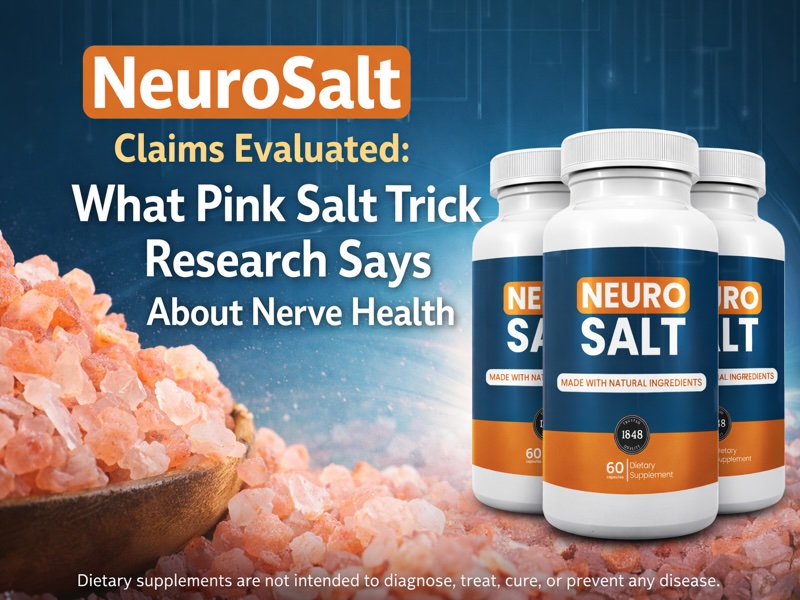
The "pink salt trick" has become a widely searched phrase in 2026, often associated with nerve health supplements like NeuroSalt. If you have seen it mentioned on social media, in a wellness blog, or in an ad that caught your attention — you are not alone. The phrase has been circulating heavily across platforms like Facebook, Instagram, and TikTok, especially among adults over 40 who deal with persistent nerve discomfort, tingling in the hands and feet, or numbness that chips away at daily comfort and mobility.
Individuals searching for this phrase often encounter a range of marketing claims and informational content. If that describes your experience, you likely want to know what this product actually is, what the company says about it, and whether there is anything behind the ingredient references — before making a purchase decision.
That is exactly what this page covers. A clear walkthrough of how NeuroSalt presents its product, what types of research its materials reference, and what distinctions are worth understanding before you make your own decision.
Full product details, current pricing, and terms are available at View the current NeuroSalt offer (official NeuroSalt page).
NeuroSalt and the Pink Salt Trick Trend
The "pink salt trick" is a phrase that has gained significant traction across social media and wellness communities heading into 2026. It is not a clinical term. It is not a medical protocol. It is a consumer-facing marketing concept that has become associated with natural approaches to nerve health supplementation.
If you saw it in an ad, you probably noticed it was designed to spark curiosity — and it works. People see the phrase, feel a connection to their own nerve discomfort, and immediately open a new tab to search for more information. That is the exact scenario this page is designed for: you saw the phrase, you want the real picture, and you want it explained in plain language.
NeuroSalt is the product most frequently associated with this phrase. The company positions NeuroSalt as a dietary supplement formulated with botanical ingredients intended to support nerve health, comfort, and mobility. The product is distributed by NeuroSalt Research out of Lakeland, Florida, with payments processed through ClickBank as the authorized retailer.
Within the company's product materials, NeuroSalt is described as being manufactured in the United States in an FDA-registered facility. The product contains 60 capsules per bottle at a suggested serving of two capsules daily. The capsule shell uses hydroxypropyl methylcellulose, making it suitable for vegetarian consumers. Other listed inactive ingredients include microcrystalline cellulose and magnesium stearate.
One detail worth noting upfront: an FDA-registered facility is a manufacturing location that has registered with the FDA as required by federal law. Registration means the facility is subject to FDA inspection. It does not mean the FDA has reviewed, approved, or endorsed any specific product manufactured at that location. This is a standard distinction across the entire dietary supplement industry — not specific to NeuroSalt.
How NeuroSalt Presents Its Claims
This is where the title of this article lives — and where clarity matters most for anyone doing research before purchasing.
NeuroSalt presents its product using outcome-oriented language such as "eliminate nerve pain," "stop tingling," and "restore optimal nerve health" within its publicly available materials. These phrases appear prominently throughout the official product page and represent how the company frames the supplement's intended purpose.
Here is what is important to understand: these phrases describe the company's aspirational product positioning. They are not clinical conclusions drawn from trials conducted on the finished NeuroSalt formula. No published clinical trial appears to have evaluated NeuroSalt as a completed proprietary product through a randomized, placebo-controlled study in humans.
That does not mean the product has no basis for its positioning. It means the basis comes from ingredient-level research — published studies on individual botanical compounds — rather than from product-level clinical evidence. This is an extremely common framework across the dietary supplement industry, and understanding the distinction is one of the most useful things you can take away from this page.
The company's product label also includes the standard FDA disclaimer: "These statements have not been evaluated by the Food and Drug Administration. This product is not intended to diagnose, treat, cure, or prevent any disease." This disclaimer is required on all dietary supplements under federal law and appears on NeuroSalt's own labeling.
This content is not intended to function as a product review, endorsement, or independent evaluation. It is an informational overview based on how NeuroSalt presents its product, ingredients, and general research references within publicly available materials.
Ingredient Categories Referenced in NeuroSalt Materials
Unlike many supplements in the nerve health space that use proprietary blends, NeuroSalt discloses individual ingredient amounts on the Supplement Facts panel. This is a transparency detail that allows direct comparison with published research — it means you and your healthcare provider can see exactly what is in each serving and compare those amounts against published studies if you choose to.
Here is what the label shows per two-capsule serving:
Passionflower (Passiflora incarnata) — 145 mg
Passionflower has a long history of use in traditional herbal medicine for anxiety, sleep support, and neuralgia. Within NeuroSalt's materials, this ingredient is described as a nervous system calmant that acts on central nervous system receptors. In the published research literature, Passiflora incarnata has been studied for its GABAergic properties — meaning it interacts with the GABA neurotransmitter system, which plays a role in regulating nerve signaling and the perception of pain. A 2016 study published in BMC Complementary and Alternative Medicine examined passionflower extract in animal models of diabetic neuropathic pain and reported pain-reducing effects through GABAergic and opioidergic mechanisms. A 2025 systematic review in MDPI Neurology International noted emerging evidence for multiple neurobiological pathways beyond GABA modulation.
These are ingredient-level findings from preclinical research. The dosages used in animal studies often exceeded 200 mg/kg of body weight — substantially higher on a per-weight basis than what a 145 mg human supplement serving provides. Human clinical trials specifically evaluating passionflower for neuropathic pain remain limited.
Marshmallow (Althaea officinalis) Root — 110 mg
Marshmallow root has traditionally been used for its mucilaginous properties — primarily for soothing irritated mucosal tissues in the throat and digestive tract. Within NeuroSalt's materials, this ingredient is positioned as a "protector of irritated nerve tissues" that reduces inflammatory processes. Published research on marshmallow root focuses primarily on its demulcent and anti-inflammatory effects on mucosal surfaces. Published peer-reviewed research specifically evaluating marshmallow root for nerve tissue protection or neuropathic pain relief in human studies appears limited based on available literature.
Corydalis (Corydalis yanhusuo) Powder — 100 mg
Corydalis yanhusuo has perhaps the most substantial published research among the ingredients in this formula for pain-related applications. Within NeuroSalt's materials, this ingredient is described as a natural analgesic that blocks neuropathic pain signals. In published research, a 2016 study in PLOS ONE by University of California, Irvine researchers systematically evaluated Corydalis yanhusuo extract across multiple standardized pain models and reported that it attenuated acute, inflammatory, and neuropathic pain in animal models without causing tolerance — a notable finding, since tolerance is a significant limitation with many conventional analgesics. The researchers identified dopamine D2 receptor antagonism as a key mechanism. A controlled human trial conducted at the University of Chicago reported that oral administration of Corydalis yanhusuo extract significantly decreased pain intensity scores in a cold-pressor pain model.
Published animal studies typically used YHS at 100–500 mg/kg of body weight. Reports from Chinese clinical research have referenced dosages of 75 mg of the isolated alkaloid tetrahydropalmatine (THP) daily, or 5–10 grams of crude herb equivalent. NeuroSalt provides 100 mg of Corydalis powder per serving — the relationship between this amount and dosages used in published studies depends on factors like extract concentration and alkaloid content, which are not specified on the label.
Safety note: published literature has associated THP with liver-related concerns in some reports. Consumers taking other medications should discuss this ingredient with a healthcare provider.
Prickly Pear (Opuntia phaeacantha) 20:1 Extract — 50 mg
Prickly pear is rich in antioxidant compounds including betalains and polyphenols. Within NeuroSalt's materials, this ingredient is positioned as combating oxidative stress in nerves. Oxidative stress is a recognized factor in neuropathic conditions within published literature, and prickly pear does demonstrate antioxidant activity in laboratory settings. The 20:1 extract ratio means 50 mg represents a concentrated form. However, published clinical trials specifically evaluating prickly pear extract for nerve protection or neuropathy-related outcomes in humans appear limited.
California Poppy (Eschscholzia californica) Seed — 45 mg
California poppy has traditional use as a mild sedative and analgesic. It contains alkaloids studied for their effects on GABA receptors and pain signaling. Within NeuroSalt's materials, this ingredient is described as reducing anxiety and muscle tension that amplify nerve pain while improving nighttime rest. Published research, primarily in animal models, suggests mild sedative and pain-modulating properties. At 45 mg per serving, this is the smallest-dosed ingredient in the formula.
Research referenced in NeuroSalt materials generally relates to individual ingredients and broader categories of study, rather than clinical trials conducted on the finished NeuroSalt formulation itself. This is a standard framework across the dietary supplement industry — not unique to this product — and understanding it is one of the most valuable tools you can have when evaluating any supplement.
Understanding How Supplement Claims Are Interpreted
If you are reading this page, you are probably trying to figure out whether the claims you saw in an ad are legitimate. That is a smart instinct. Here is some context that applies not just to NeuroSalt but to any dietary supplement you might consider.
Under current federal regulations, dietary supplements do not require FDA approval before being sold. The FDA does not evaluate supplement marketing claims for accuracy or efficacy before products reach the market. This means the language a supplement company uses on its website — phrases like "eliminate," "restore," or "clinically proven" — reflects the company's own characterization of its product, not a conclusion validated by a regulatory body.
The phrase "clinically proven" has a specific meaning in scientific and regulatory contexts. It typically refers to a finished product that has been tested through a randomized, double-blind, placebo-controlled trial with human participants, measuring defined endpoints, with results published in a peer-reviewed journal. When supplement companies reference "clinically proven ingredients," they are usually pointing to studies conducted on individual compounds — not the finished formula you would be purchasing.
This does not mean ingredient-level research has no value. It absolutely does. It means the jump from "this ingredient showed promising results in a laboratory study" to "this specific product will produce that result for you" involves variables that have not been controlled for — including dosage differences, ingredient interactions within the blend, individual health factors, and the difference between animal and human physiology.
The most informed supplement consumers are the ones who understand this framework. It does not require you to be a scientist. It just requires you to ask: "Is this claim about the ingredient or about the product I would actually be taking?"
Important Distinctions Between Product Claims and Clinical Evidence
What the company's materials describe: NeuroSalt's product information uses outcome-oriented language — "eliminate nerve pain," "stop tingling," "restore complete mobility." These describe the company's aspirational positioning for its product.
What published ingredient research shows: Several ingredients in this formula — particularly Corydalis yanhusuo and Passionflower — have published research in peer-reviewed journals demonstrating activity in pain models and nerve-related pathways. This research exists primarily in animal models, with limited human clinical data. The studies examined isolated compounds at specific dosages under controlled conditions.
Where the gap exists: No published clinical trial appears to have evaluated NeuroSalt as a finished five-ingredient formula. The dosages used in published ingredient studies may differ from the amounts present in this supplement. The interaction effects of combining these five specific ingredients at these specific dosages have not been characterized in published literature.
Understanding these distinctions is not about dismissing the product. It is about knowing exactly what has and has not been demonstrated so you can make a purchasing decision that matches your own expectations and comfort level.
Who This Product May Be Relevant For
NeuroSalt's ingredient profile and positioning may align with people who:
Prefer plant-based supplement approaches with full label transparency: NeuroSalt discloses individual ingredient amounts rather than using a proprietary blend — a transparency detail that allows anyone to see exactly what they are taking and discuss specific dosages with their healthcare provider.
Are exploring botanical options as part of a broader approach to nerve comfort: Adults who view supplementation as one component alongside medical care, dietary adjustments, and lifestyle modifications may find the ingredient profile relevant to their personal research.
Value ingredients that have some published research context: Corydalis and Passionflower both have published studies — primarily in animal models — suggesting potential relevance to pain processing and nerve function pathways.
Other options may be more suitable for people who:
Have a diagnosed neuropathic condition requiring medical treatment: Peripheral neuropathy has established medical treatments. Anyone with a medical diagnosis should work with their healthcare provider on evidence-based treatment options rather than relying on a dietary supplement as a primary approach.
Need product-level clinical evidence before purchasing: If finished-product clinical trials are important to your purchasing criteria, NeuroSalt does not currently appear to have published studies evaluating the completed formula.
Take medications for pain, diabetes, blood pressure, or blood thinning: Several ingredients have documented interaction potential. A healthcare provider conversation is essential before adding any supplement to an existing medication regimen.
Questions worth asking yourself before purchasing any nerve health supplement:
Have you discussed your nerve discomfort with a healthcare provider to understand what is causing it? Are you looking for primary treatment or complementary support — and does that distinction change what product category is appropriate? Are you comfortable with a product backed by ingredient-level research rather than finished-product clinical trials? Do you have a realistic timeline for evaluating results, understanding that supplement outcomes vary widely between individuals?
Your answers to these questions matter more than any marketing claim on any product page. Readers who want to review the full ingredient list and product details firsthand can View the current NeuroSalt offer (official NeuroSalt page).
Availability and Product Information
NeuroSalt states that its supplement is available in multiple package options, with pricing and availability subject to change. Full details are provided within official product materials.
The company's available information describes a 60-day money-back guarantee from the date of purchase. Per the stated terms, consumers who are unsatisfied can request a full refund by contacting support at contact@customercs.com. Per those same terms, all bottles should be returned to the company's address, and return shipping costs are the customer's responsibility. Refund processing timelines depend on the buyer's payment method and financial institution. Refund requests can also be initiated through ClickBank's self-service portal.
Readers seeking additional product details can View the current NeuroSalt offer (official NeuroSalt page).
Frequently Asked Questions
What is the pink salt trick?
The "pink salt trick" is a consumer-facing phrase that has gained traction across social media and wellness communities. It is not a recognized medical protocol or clinical concept. NeuroSalt's marketing connects the product to this phrase through its botanical ingredient blend and nerve health positioning.
Is NeuroSalt FDA approved?
NeuroSalt is a dietary supplement. Under federal regulations, dietary supplements do not require FDA approval before being sold. The product label includes the standard FDA disclaimer. The company states the product is manufactured in an FDA-registered facility — this relates to manufacturing inspection standards, not product approval or endorsement.
Does NeuroSalt use a proprietary blend?
No. NeuroSalt discloses individual ingredient amounts on the Supplement Facts panel — Passionflower (145 mg), Marshmallow Root (110 mg), Corydalis Powder (100 mg), Prickly Pear 20:1 Extract (50 mg), and California Poppy Seed (45 mg). This transparency allows direct comparison against published research dosages.
Has NeuroSalt been tested in clinical trials?
No published clinical trial appears to have evaluated NeuroSalt as a finished five-ingredient formula. The research referenced in the product's materials relates to individual ingredients studied under controlled conditions — not the completed product. This distinction is standard across the supplement industry.
Is NeuroSalt safe to take with medications?
Several ingredients have documented interaction potential. Corydalis contains alkaloids that affect dopamine receptors and has been associated with liver-related concerns in some published reports. Passionflower and California Poppy have mild sedative properties that could interact with prescription sedatives, anti-anxiety medications, or sleep aids. Anyone taking medications should consult a healthcare provider before use.
What is the NeuroSalt refund process?
The company describes a 60-day money-back guarantee. Refund requests are handled through the support email (contact@customercs.com) or through ClickBank's self-service portal. Per the stated terms, all bottles must be returned, and return shipping costs are the customer's responsibility.
Readers who have completed their own research and want to review the full product details, ingredient list, and current terms can View the current NeuroSalt offer (official NeuroSalt page).
Contact Information
For questions before or during the ordering process, NeuroSalt's available materials list the following support channels:
Company: NeuroSalt Research
Phone: +1 (507) 448-8190
Email: contact@customercs.com
Location: Lakeland, FL 33804
Payment Processor: Click Sales Inc. (ClickBank), 1444 S. Entertainment Ave., Suite 410, Boise, ID 83709
ClickBank Order Support: support@clickbank.com | US: 1-800-390-6035 | International: 1-208-345-4245
Self-Service Billing: https://www.clkbank.com/
Complete product details, current pricing, and terms are available at View the current NeuroSalt offer (official NeuroSalt page).
Disclaimers
Content and Consumer Information Disclaimer: This content is an informational overview based on how NeuroSalt presents its product, ingredients, and general research references within publicly available materials. It is not intended to function as a product review, endorsement, or independent evaluation. It does not constitute medical, health, dietary, financial, or legal advice. All product details, ingredient information, pricing, and policy terms described are stated as presented by the company. Readers are encouraged to verify all details directly with the manufacturer and to consult a qualified healthcare professional before beginning any dietary supplement.
FDA Health Disclaimer: These statements have not been evaluated by the Food and Drug Administration. This product is not intended to diagnose, treat, cure, or prevent any disease. Always consult your physician before starting any new supplement, especially if you have existing health conditions, take medications, or are pregnant or nursing.
Professional Medical Disclaimer: This content is educational and does not constitute medical advice. NeuroSalt is a dietary supplement, not a medication. If you are currently taking medications, have existing health conditions, are pregnant or nursing, or are considering any major changes to your health regimen, consult your physician before starting NeuroSalt or any new supplement. Do not change, adjust, or discontinue any medications or prescribed treatments without your physician's guidance and approval.
Results May Vary: Individual results will vary based on factors including age, baseline nerve health, underlying medical conditions, lifestyle factors, consistency of use, genetic factors, current medications, and other individual variables. Results are not guaranteed. People who share feedback about supplements are self-selected — satisfied customers are significantly more likely to post their experiences than those with neutral or negative outcomes.
FTC Affiliate Disclosure: This article contains affiliate links. If a purchase is made through these links, a commission may be earned at no additional cost to the buyer. Click Sales Inc. (ClickBank) serves as the authorized payment processor for this product. ClickBank's role as retailer does not constitute an endorsement, approval, or review of this product or any claim, statement, or opinion used in its promotion. This compensation does not influence the accuracy or integrity of the information presented.
Pricing Disclaimer: All prices, discounts, and promotional offers mentioned were accurate at the time of publication (March 2026) but are subject to change without notice. Always verify current pricing and terms on the official NeuroSalt website before making your purchase.
Publisher Responsibility: The publisher of this content has made every effort to ensure accuracy at the time of publication. Responsibility is not accepted for typographical errors, manufacturer changes to the product after publication, or individual consumer outcomes. Readers are encouraged to verify all details directly with NeuroSalt and their healthcare provider before making decisions.
Ingredient Interaction Warning: Some ingredients in NeuroSalt may interact with certain medications or health conditions. Corydalis has been associated with liver-related concerns in some published reports and contains alkaloids that affect dopamine receptors. Passionflower and California Poppy have mild sedative properties that may interact with prescription sedatives, anti-anxiety medications, or sleep aids. Always consult your healthcare provider before starting any supplement, especially if you take blood thinners, blood pressure medications, diabetes medications, sedatives, or have any chronic health conditions.

Phone: +1 (507) 448-8190 Email: contact@customercs.com