
Bale Collision Center is highlighting the importance of Advanced Driver Assistance Systems (ADAS) calibration as modern vehicles continue incorporating increasingly sophisticated safety technologies that require specialized inspection and calibration following certain collision repairs.
According to the company, today's vehicles rely on an expanding network of cameras, radar sensors, ultrasonic sensors, and electronic control modules that support features such as automatic emergency braking, lane departure warning, blind spot monitoring, adaptive cruise control, parking assistance, and forward collision alerts. These technologies help enhance driver awareness and vehicle operation, but they may also require inspection and calibration after collision damage or certain repair procedures.
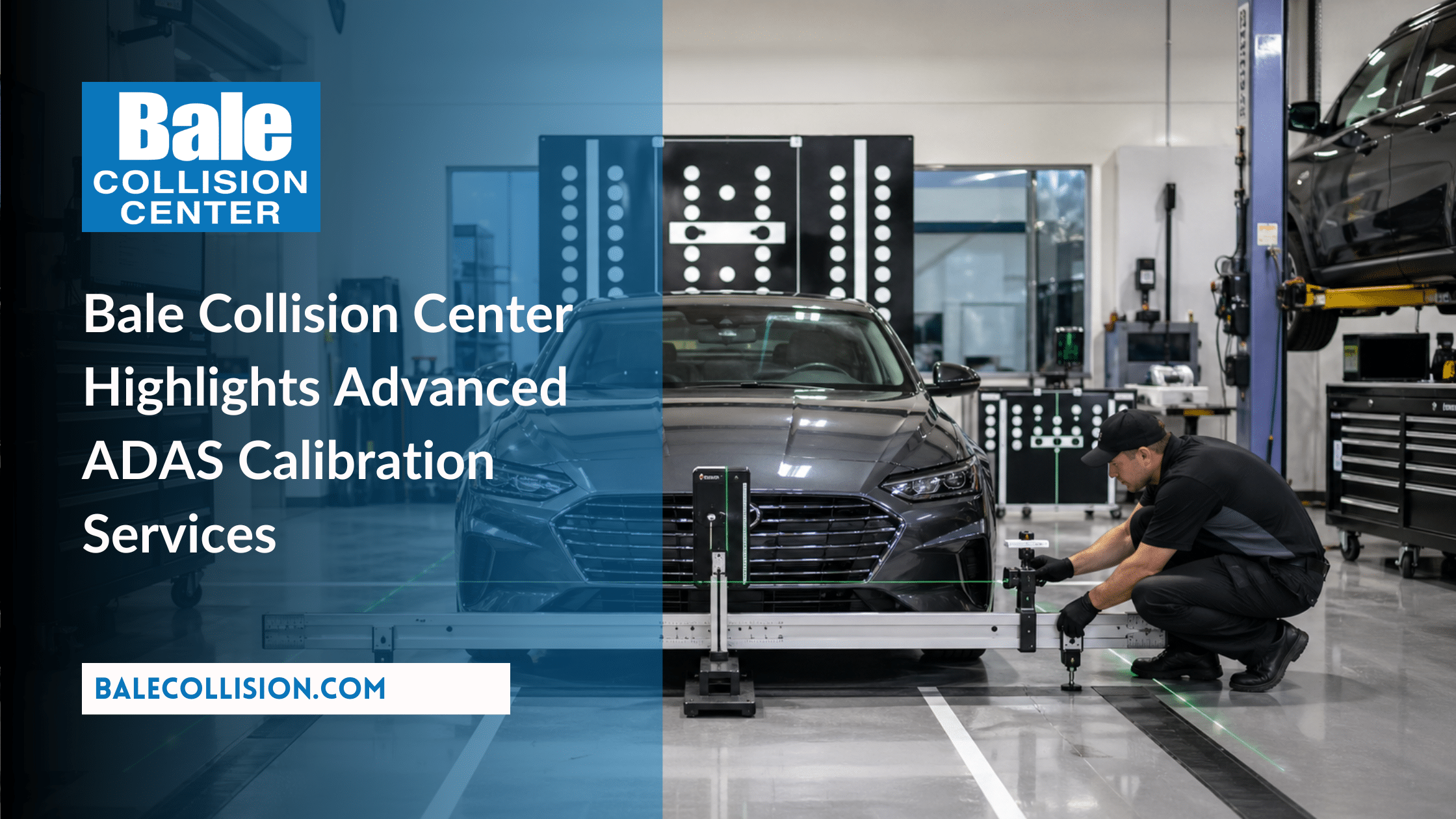
Serving drivers throughout Little Rock and surrounding Central Arkansas communities from its Chenal location, Bale Collision Center performs ADAS calibration as part of its comprehensive collision repair process. The company continues investing in technician education, diagnostic equipment, and manufacturer-informed repair procedures to support the growing complexity of modern vehicles.
"As vehicle technology continues evolving, collision repair extends well beyond repairing visible damage," said a representative of Bale Collision Center. "Modern vehicles often require careful evaluation of their electronic safety systems, and proper calibration is an important part of restoring many of today's advanced driver-assistance features."
The company explains that ADAS components are commonly mounted behind front and rear bumpers, windshields, side mirrors, grilles, and other body panels that may be affected during a collision. Even relatively minor impacts or component replacements can influence sensor positioning, making post-repair inspection and calibration an important consideration depending on the manufacturer's repair recommendations.
According to Bale Collision Center, the repair process begins with a detailed assessment of the vehicle's condition. Technicians evaluate visible damage, review manufacturer repair information, and determine whether diagnostic procedures or calibration services may be required based on the vehicle's equipment and the repairs being performed. This structured approach helps establish an organized repair plan before restoration begins.
The company also notes that ADAS calibration frequently works alongside other repair procedures. Structural repairs, suspension work, wheel alignments, windshield replacement, bumper replacement, and refinishing may all influence the timing of calibration services. Coordinating these repairs in the proper sequence helps ensure that vehicle systems are evaluated after all necessary mechanical and structural work has been completed.
Bale Collision Center emphasizes that manufacturer repair information plays a central role throughout the calibration process. Every automaker develops specific inspection procedures, calibration requirements, and repair guidelines for its vehicle lineup. Reviewing current manufacturer documentation allows technicians to prepare repair strategies appropriate for each individual vehicle rather than applying a universal approach.
Technician education is another important aspect of the company's ADAS repair capabilities. As manufacturers continue introducing new sensors, software updates, camera technologies, and electronic safety systems, collision repair professionals must continually update their knowledge and skills. Bale Collision Center remains committed to ongoing training that helps technicians stay current with evolving vehicle technologies and repair procedures.
Customer education has also become increasingly important as advanced safety technologies become standard equipment on many new vehicles. Many vehicle owners are surprised to learn that cameras or radar sensors may require calibration after a collision, even when damage appears relatively minor. Bale Collision Center believes explaining these repair requirements helps customers better understand the complexity of modern vehicle restoration and the importance of following manufacturer-informed repair procedures.
The company explains that ADAS calibration contributes to the overall repair process by helping technicians evaluate systems after repairs have been completed. While cosmetic repairs restore a vehicle's appearance, calibration procedures address the electronic systems that support many of today's safety and driver-assistance features. This combination reflects how collision repair continues evolving alongside advances in automotive engineering.
As vehicle manufacturers continue introducing increasingly sophisticated technologies, repair facilities must continue investing in equipment, technician education, and operational improvements. Bale Collision Center views these investments as an important part of serving customers whose vehicles now include complex electronic systems that require specialized attention throughout the repair process.
Through its continued focus on advanced ADAS calibration services, Bale Collision Center serves drivers throughout Little Rock and surrounding Central Arkansas communities with repair solutions designed for today's increasingly advanced vehicles. The company remains committed to combining experienced technicians, specialized diagnostic technology, and manufacturer-informed repair procedures to help restore vehicles following collision damage.
More information about ADAS repair and calibration services is available through Bale Collision Center. Additional company updates and repair information are available through Bale Collision Center on Facebook.
About Bale Collision Center
Bale Collision Center is a collision repair provider serving drivers throughout Central Arkansas with locations in Chenal and Downtown Little Rock. The company provides collision repair, auto body repair, ADAS calibration, paintless dent repair, auto paint refinishing, glass replacement, and related vehicle restoration services. Bale Collision Center emphasizes technician education, manufacturer-informed repair procedures, advanced repair technology, and customer communication throughout every stage of the repair process.
###
For more information about Bale Collision Center, contact the company here:
Bale Collision Center (Chenal)
Jason Spiller
(501) 221-7181
jspiller@baleautomotive.com
13101 Chenal Pkwy, Little Rock, AR 72211, United States